The Physics of Feel: How 24-Ton Graphite Redefines Durability in Modern Angling
Update on Nov. 19, 2025, 10:25 a.m.
In the world of angling, there has long existed a frustrating dichotomy: you could choose a rod that was virtually indestructible but felt like fishing with a garden hose, or you could choose a high-performance graphite wand that transmitted every nibble but shattered if you looked at it wrong. For decades, “toughness” and “sensitivity” were mutually exclusive virtues.
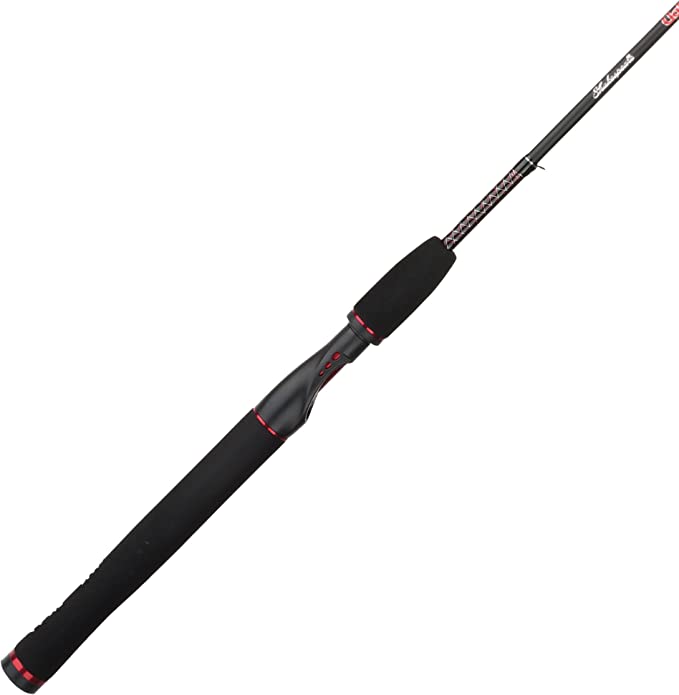
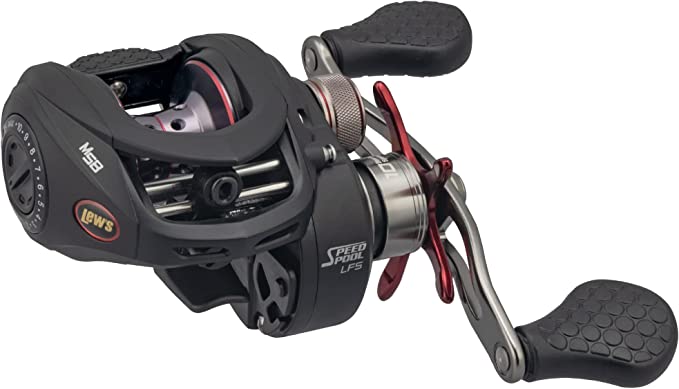
However, the democratization of materials science is rapidly dismantling this trade-off. The modern angler no longer has to sacrifice the ability to feel a subtle uptake for the assurance that their gear will survive a rough truck bed ride. By examining the engineering behind setups like the Ugly Stik Carbon Low Profile Baitcast Reel and Fishing Rod Combo, we can understand a broader shift in the industry: the move towards gear that is chemically engineered to be both lightweight and remarkably resilient.

The Material Revolution: Demystifying 24-Ton Graphite
To understand why modern “workhorse” rods feel different than their predecessors, we must look at the blank’s construction. The term “graphite” is thrown around loosely, but the specific grade matters.
The Modulus Balance
When manufacturers refer to 24-ton graphite, they are describing the tensile modulus of the carbon fibers—essentially, their stiffness-to-weight ratio. * Low Modulus (Standard Fiberglass): Extremely flexible and durable, but heavy and poor at transmitting vibration. * High Modulus (40-ton+): Extremely stiff and sensitive, but brittle and prone to catastrophic failure under impact.
The “24-ton” rating represents a strategic “Goldilocks” zone for general-purpose angling. It provides a dramatic reduction in weight—often up to 30% lighter than traditional composite rods—while maintaining a structural integrity that resists the micro-fractures common in higher-modulus blanks.
The Solid Tip Advantage
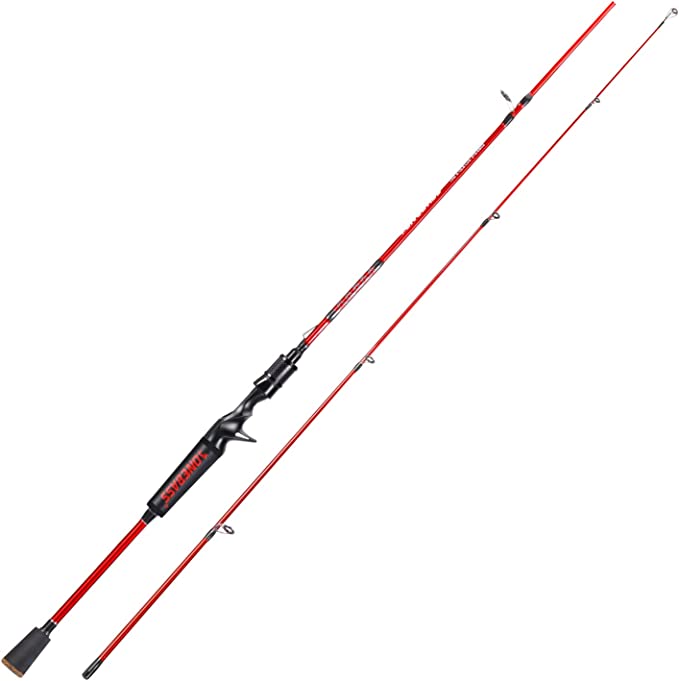
A critical engineering nuance in rods like the USCBCA701MH/LPCBO is the integration of a solid graphite tip. Unlike a hollow tubular tip, a solid tip offers a unique blend of flexibility and strength. It allows for a softer entry when a fish strikes (preventing the hook from ripping out) while maintaining the “high tensile strength” needed to leverage fish out of cover. This construction method creates a continuous pathway for kinetic energy. When a bass inhales a lure, the energy transfer travels uninterrupted from the solid tip through the 24-ton blank directly to the angler’s hand, resolving the historic issue of “numb” durable rods.
Ergonomics and Mechanics: The Low-Profile Shift
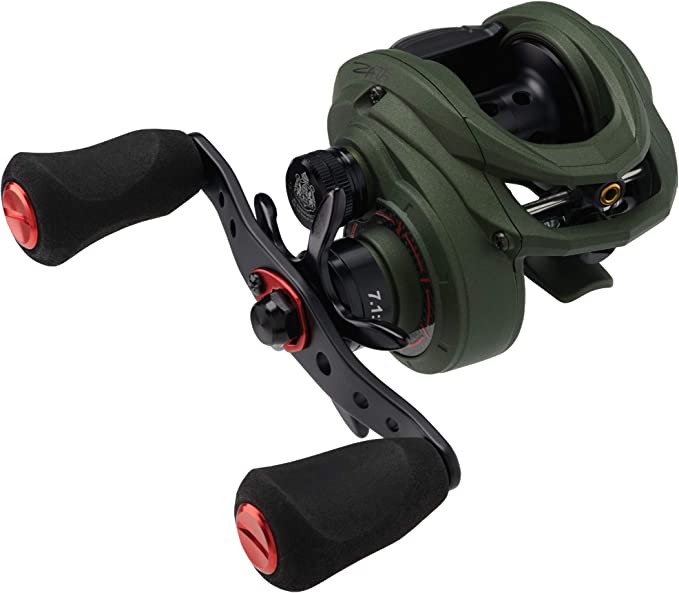
The rod is the antenna, but the reel is the engine. The industry-wide shift from round-profile reels to Low Profile (LP) designs is not purely aesthetic; it is rooted in biomechanics.
The Palming Advantage
A low-profile reel sits recessed on the rod blank, lowering the center of gravity for the entire setup. This allows the angler to “palm” the reel—wrapping their hand around both the reel and the rod. This grip style serves two functions:
1. Fatigue Reduction: It aligns the wrist in a more natural, neutral position, reducing strain during thousands of casts.
2. Sensory Contact: By holding the reel and rod simultaneously, the angler’s hand is in direct contact with the reel seat and the blank, creating a direct line of communication for underwater vibrations.
Precision Gearing and Line Management
Modern baitcasting systems rely on precise internal tolerances to function correctly. A standard 6.4:1 gear ratio, found in versatile combos, offers a mechanical compromise. It is fast enough to pick up line quickly after a cast but retains enough torque (winching power) to handle resistance.
Supporting this are bearing systems (typically 5 or more in quality entry-to-mid-tier reels) that stabilize the spool shaft. The goal is to reduce friction during the high-speed rotation of a cast. Furthermore, the integration of Instant Anti-Reverse bearings has become a non-negotiable standard. This technology eliminates “back-play” in the handle, ensuring that 100% of the force applied during a hookset is transferred to the hook point, rather than being lost to mechanical slop.

The Connectivity Chain: Guides and Grips
The final variables in the sensitivity equation are often the most overlooked: the guides and the handle.
Guide Train Dynamics:
Guides are not merely loops for the line; they are stress distribution points. In robust designs like the UglyTuff™ guides, the focus is on eliminating the ceramic insert entirely. Traditional ceramic inserts, while smooth, are the Achilles’ heel of durability—prone to popping out or chipping. By utilizing one-piece stainless steel guides, engineers remove the failure point. While theoretically slightly less smooth than high-end ceramics, modern metallurgy allows for polished steel surfaces that handle braided lines without issue, ensuring reliability in rough environments.
Tactile Interface:
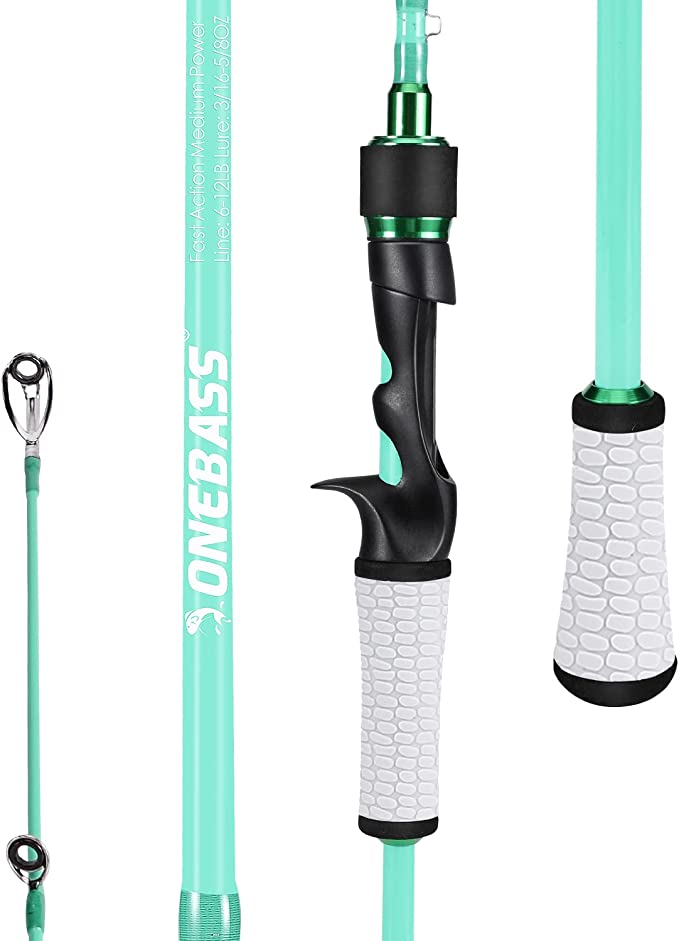
The interface between the angler and the equipment determines control. The use of split-grip handles featuring materials like WINN® grips (a polymer originally developed for golf clubs and tennis rackets) alongside high-density EVA foam represents a functional evolution. These materials are hydrophobic (repel water) and tacky, ensuring that grip pressure can be maintained without excessive squeezing, further enhancing sensitivity and reducing hand fatigue.
Engineering a System, Not Just Components
When evaluating a setup like the Ugly Stik Carbon combo, it is crucial to view it as a cohesive system rather than isolated parts. The 7-foot medium-heavy blank, the aluminum spool, the 15lb max drag system—these are calibrated to work in unison.
For the angler, this signifies a departure from the era where “durability” meant “heavy and dull.” We have entered an age where materials science allows for gear that respects the physical demands of the sport—the need for lightness and sensitivity—without forgetting that, ultimately, fishing is a contact sport where gear gets knocked, dropped, and tested. Whether you are targeting bass in heavy cover or trout in fast currents, the technology backing today’s carbon rods proves that you no longer need to choose between feeling the bite and landing the fish.