Material Hybridization in Angling: Decoding Composite Blanks and Drag Mechanics
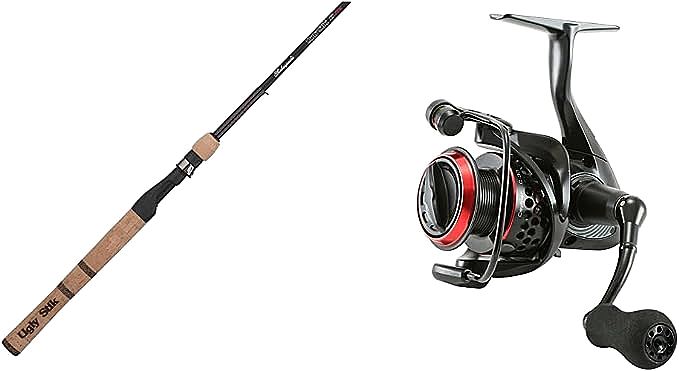
Ugly Stik Elite Spinning Rod, Okuma Ceymar Lightweight Spinning Reel
In the world of angling, there exists a fundamental tension between two physical properties: sensitivity and durability. This trade-off is dictated by the materials used to construct the rod blank. On one end of the spectrum, we have high-modulus graphite—stiff, incredibly lightweight, and capable of transmitting the faintest vibration, yet notoriously brittle and prone to catastrophic failure under impact. On the other end lies fiberglass—heavy, flexible, and capable of enduring immense strain, but often described as "dead" or numb in hand.
For the angler navigating the waters between budget constraints and performance needs, understanding how engineers bridge this gap is essential. It is not simply about choosing one material over the other, but understanding the science of composite hybridization. The Ugly Stik Elite Spinning Rod serves as a prominent industry example of this engineering philosophy, attempting to synthesize the nervous system of graphite with the skeletal durability of fiberglass.
The Physics of the Blank: Modulus and Action
To understand rod performance, we must first understand Young’s Modulus, a measure of a material's stiffness. * Graphite (Carbon Fiber): Has a high modulus. It resists bending, which means it recovers its shape quickly (fast action) and transmits energy waves (vibrations from a fish bite) efficiently to the angler's hand. * Fiberglass: Has a lower modulus. It bends easily and absorbs energy, which makes it incredibly tough but poor at transmitting fine details.
The Composite Solution
The engineering challenge is to combine these materials without creating weak points. The specific construction method used in rods like the Ugly Stik Elite involves a graphite core wrapped or infused with fiberglass. By increasing the graphite content (nominally 35% more than previous iterations like the GX2), engineers alter the rod's Action.
Standard fiberglass rods are typically "Slow" or "Moderate" action, bending deep into the handle. By adding graphite, the rod becomes stiffer, pushing the flex point towards the tip ("Fast" or "Extra Fast" action). This allows for quicker hook sets and better sensitivity while retaining the fiberglass's ability to withstand the "high-sticking" errors that often shatter pure carbon rods. This makes composite rods particularly viable for bank anglers or kayakers who operate in rough environments where gear is frequently banged against rocks or gunwales.
The Tip Section: A Study in Signal Transmission
A critical failure point in many hollow graphite rods is the tip. To achieve sensitivity, walls are made thin, making them fragile. A solution to this is the solid glass tip design.
From a sensory perspective, the transition from a hollow composite tube to a solid fiberglass tip (often recognizable as the clear section on these rods) creates a unique signal transfer. While a solid material dampens some high-frequency vibrations compared to a hollow tube, it adds significant visual sensitivity. The tip acts almost like a spring; before the angler feels the weight of a fish, the flexible glass tip visually loads up. This hybrid approach prioritizes durability and visual cueing over the electric, tactile shock transmission of high-end, pure graphite blanks.
Guide Engineering: Eliminating the Weak Link
In mechanical systems, complexity often breeds failure. Traditional rod guides consist of a metal frame holding a ceramic ring (insert). These inserts are hard and smooth, reducing line friction. However, they are also brittle. An accidental impact can crack the ceramic or pop it out of the frame, rendering the rod useless as the sharp metal frame shreds the fishing line.
An alternative engineering approach, seen in the Ugly Tuff™ guides, is the use of one-piece stamped stainless steel. * The Trade-off: Steel is not as hard or heat-dissipating as ceramic (Silicon Carbide or Titanium Oxide). For extremely heavy drag runs with monofilament, heat buildup could theoretically be an issue. * The Benefit: By removing the insert, the primary failure mode is eliminated. For general freshwater and light inshore applications using braided line, the durability gain outweighs the marginal increase in friction. This is a classic example of designing for reliability over peak theoretical performance.
The Engine of Control: Rotor Dynamics and Drag
While the rod manages the load, the reel manages the torque. Pairing a composite rod with a reel like the Okuma Ceymar highlights the importance of chassis rigidity in lightweight designs.
Static vs. Kinetic Friction in Drag Systems
The most critical component of a spinning reel is the drag system. Its job is to release line under tension to prevent breakage. Physics dictates that Static Friction (friction between non-moving surfaces) is higher than Kinetic Friction (friction between moving surfaces). * The Problem: A poor drag "sticks" before it starts slipping. This initial spike in resistance (start-up inertia) is when lines often snap. * The Solution: Multi-disc drag systems increase the surface area of friction. By using felt or carbon fiber discs soaked in specific greases, engineers aim to lower the coefficient of static friction, bringing it closer to the kinetic friction value. This ensures that the force required to start the spool moving is nearly the same as the force to keep it moving, resulting in a smooth, consistent payout of line that protects the knot and the rod blank.
Conclusion: The Value of System Balance
High-end, pure graphite gear offers undeniable performance advantages in controlled scenarios. However, for the rough-and-tumble reality of everyday angling, the theoretical superiority of pure carbon often bows to the practical reliability of composites. By blending the stiffness of graphite with the toughness of fiberglass, and pairing it with mechanically sound reel architecture, modern manufacturing has created a "sweet spot" in the market. It proves that sophisticated engineering isn't just about making things lighter or more expensive—it's about solving the specific problems of durability and usability for the angler on the water.
Ugly Stik Elite Spinning Rod, Okuma Ceymar Lightweight Spinning Reel
Related Essays

The Unbreakable Compromise: The Materials Science Behind the Ugly Stik GX2

The Physics of Feel: How 24-Ton Graphite Redefines Durability in Modern Angling

Tempo Vertix 1000 Spinning Reel: Reimagine Your Freshwater Fishing Experience

The Angler's Dilemma: Deconstructing the Science of the KastKing Konvert Twin Tip Ice Rod
