The Invisible Tether: Bluetooth 5.4, Latency, and the Architecture of Modern Wireless Audio
Update on Jan. 15, 2026, 11:58 a.m.
The wire is gone. In its place is an invisible, pulsating tether of radio waves: 2.4 Gigahertz of frequency-hopping, error-correcting, packet-switching data. We call it “Bluetooth,” and for most of us, it is a binary experience: it either works, or it doesn’t. But beneath the surface of this ubiquitous technology lies a complex and rapidly evolving architecture that defines the quality of our modern auditory life.
The Cillso H97 Wireless Earbuds arrive on the market touting Bluetooth 5.4 as a headline feature. To the uninitiated, this might look like mere version number inflation—is 5.4 really that different from 5.0 or 4.2? The answer is a resounding “yes,” but perhaps not for the reasons marketing brochures typically highlight. It is not just about “faster” or “farther.” It is about a fundamental restructuring of how devices communicate, manage power, and coexist in an increasingly crowded radio spectrum. This article deconstructs the engineering behind Bluetooth 5.4, the physics of latency, and how these invisible protocols manifest in the user experience of a device like the H97.
The Evolution of the Airwaves: From 4.0 to 5.4
To appreciate the significance of Bluetooth 5.4, we must contextualize it within the lineage of wireless evolution. Bluetooth Classic (versions 1.0 to 3.0) was a power-hungry brute, designed primarily for continuous streaming. It was effective but drained batteries rapidly.
The LE Audio Revolution
The pivotal shift began with Bluetooth 4.0 and the introduction of Bluetooth Low Energy (BLE). Originally intended for intermittent data from IoT devices (like fitness trackers), BLE was incompatible with audio streaming. However, with Bluetooth 5.2 and subsequent updates, the industry introduced LE Audio. * The LC3 Codec: At the heart of LE Audio is the Low Complexity Communication Codec (LC3). Unlike the older SBC codec, which required high bitrates for decent quality, LC3 is mathematically more efficient. It can deliver higher audio quality at half the bitrate. For a device like the Cillso H97, this translates directly to battery life. Less data to transmit means the radio can stay in a low-power state for longer, contributing to the impressive 40-hour total playtime.
What 5.4 Brings to the Table: PAwR
Bluetooth 5.4, released in early 2023, introduces a feature technically known as Periodic Advertising with Responses (PAwR). While primarily designed for electronic shelf labels in retail, its implications for consumer audio are subtle but profound. * Bidirectional Efficiency: PAwR allows the earbuds and the phone to communicate in very specific, synchronized time slots. Instead of constantly “listening” for data (which wastes power), the earbuds know exactly when the phone will send a packet. They wake up, receive the data, and go back to sleep—thousands of times per second. This micro-second synchronization is the bedrock of the H97’s connection stability and energy efficiency.
The Physics of Connection Stability: Surviving the 2.4GHz Jungle
Our world is saturated with 2.4GHz signals—Wi-Fi routers, microwaves, baby monitors, and other Bluetooth devices. For a pair of earbuds, this is a hostile environment full of interference.
Adaptive Frequency Hopping (AFH)
Bluetooth 5.4 refines Adaptive Frequency Hopping. The available 2.4GHz spectrum is divided into 40 channels (for LE). The H97 and the source device constantly map the local radio environment. If they detect interference on Channel 6 (perhaps from a nearby Wi-Fi router), they instantly agree to “hop” to Channel 32. This happens roughly 1,600 times per second. * The User Experience: In the past, walking through a busy intersection or a crowded airport would cause your music to stutter or drop out. With the advanced AFH algorithms in Bluetooth 5.4 chips, the connection is remarkably resilient. The “high-sensitivity antenna design” mentioned in the H97’s specs works in tandem with this software logic, ensuring the physical signal strength is sufficient for the software to do its job.
Latency: The Time-Domain Challenge
One of the historical weaknesses of Bluetooth is latency—the delay between the phone generating a sound and the earbud playing it. In video gaming or watching movies, high latency results in “lip-sync” issues.
The Buffer vs. The Stream
Bluetooth transmission is packet-based. Audio data is chopped into packets, transmitted, received, error-checked, and reassembled in a buffer before playback. A larger buffer ensures smooth playback (no stutters) but increases latency. * Optimization: Modern chipsets in devices like the H97 use faster processing and more efficient packet handling to shrink this buffer size without risking dropouts. While not “zero latency” like a wired connection, Bluetooth 5.4 devices can push latency down to the 40-60ms range, which is often below the threshold of human perception for audio-visual synchronization.

The User Interface of Connectivity: Auto-Pairing and Hall Sensors
The technology inside the H97 isn’t just about radio waves; it’s about the physical interaction that initiates the connection. The “Auto Pairing” feature is powered by a simple yet elegant component: the Hall Effect Sensor.
Magnetic Logic
Inside the charging case lid is a small magnet. Inside the case body is a Hall sensor.
1. Lid Closed: The magnet is close to the sensor. The circuit detects the magnetic field and keeps the earbuds in “Reset/Charge” mode.
2. Lid Open: The magnetic field weakens. The sensor triggers an interrupt signal to the Bluetooth SoC (System on Chip). The earbuds wake up and immediately broadcast their “advertisement” packets to the last paired device.
This process happens in the few milliseconds it takes for you to open the case and reach for the buds. By the time they are in your ears, the handshake is complete. This “invisible interface” is a hallmark of modern design, where the technology removes friction rather than adding it.
Battery Management: The Math of 40 Hours
The Cillso H97 claims 40 hours of total playtime. This number is a function of energy density and power consumption.
The Power Budget
- Source: A Lithium-Polymer (Li-Po) battery in the case (likely 300-500mAh) and smaller cells in the buds (30-50mAh).
- Drain: The Bluetooth radio, the audio amplifier, the DSP (Digital Signal Processor), and the LEDs.
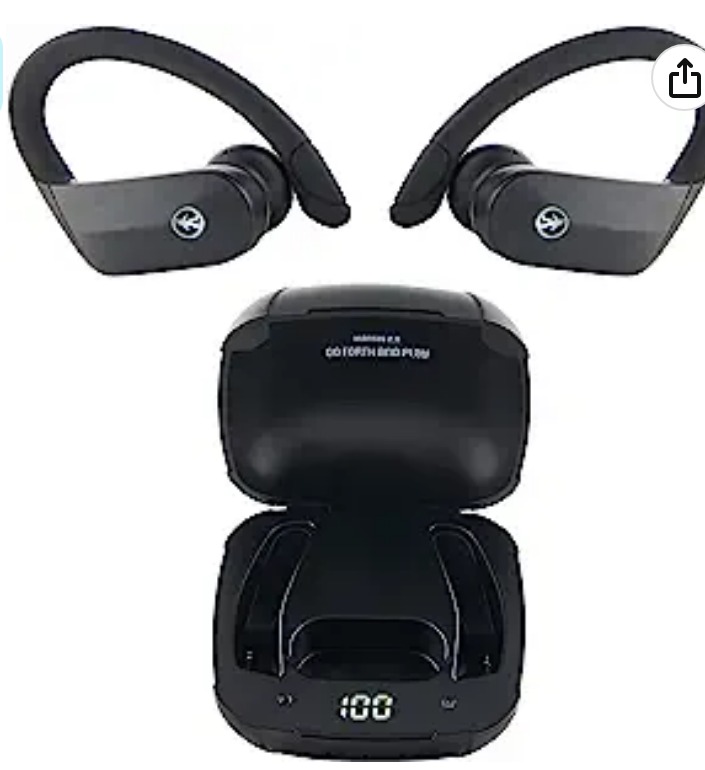
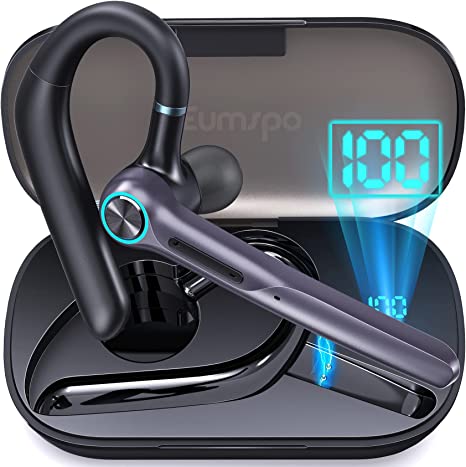
The shift to Bluetooth 5.4 is critical here. Because the radio is the biggest power consumer, the efficiency gains from LE Audio and optimized sleep states allow the same size battery to last significantly longer. The LED digital display on the case acts as a precise fuel gauge, a feature made possible by the low cost of modern microcontrollers that can accurately measure the voltage drop of the Li-Po cell and map it to a percentage.
Conclusion: The Architecture of Convenience
The Cillso H97 is more than just a plastic shell with a speaker. It is a node in a sophisticated wireless network. Its performance is defined by the unseen protocols of Bluetooth 5.4, the physics of radio frequency propagation, and the efficiency of modern silicon.
For the consumer, these technical details dissolve into a simple reality: you open the box, put them in, and they work. But understanding the “invisible tether” reveals why they work so well. It is a triumph of standardization and engineering, turning the chaotic jungle of 2.4GHz radio waves into a reliable, high-fidelity pipeline for our digital lives.