The Analog Imperative: Latency, Fidelity, and the Physics of Wired Audio
Update on Jan. 15, 2026, 11:51 a.m.
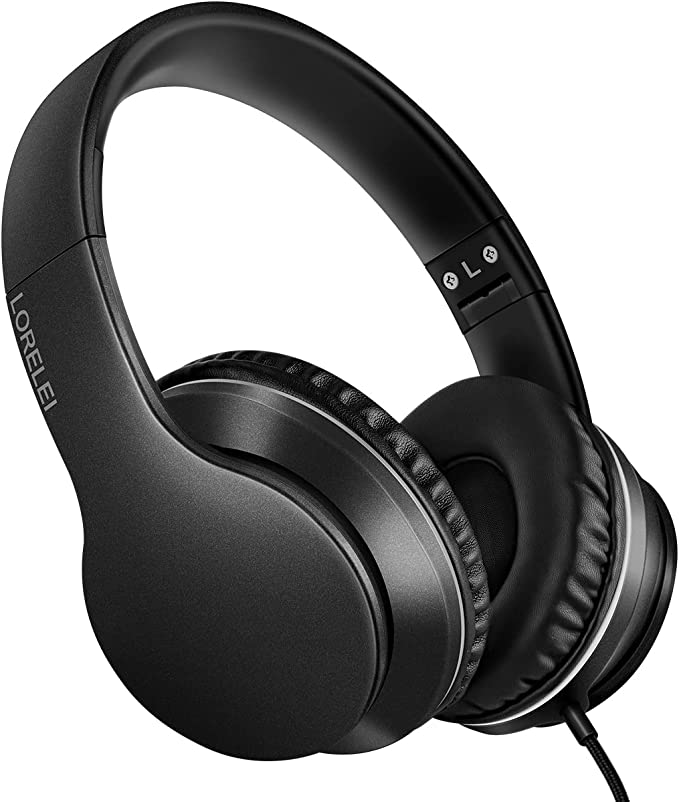
In the relentless march of technological progress, we often conflate “newer” with “better.” The audio industry has spent the last decade convincing consumers that the headphone jack is a relic, an obsolete port destined for the museum of connectivity alongside parallel ports and floppy drives. We are promised a wireless future of seamless pairing, spatial audio, and active noise cancellation. Yet, amidst this digital revolution, a quiet resistance remains. Products like the LORELEI X6 Over-Ear Headphones persist not merely because they are affordable, but because they adhere to a set of physical laws that Bluetooth has yet to conquer.
The survival of the wired headphone is not an accident of market economics; it is an assertion of the “Analog Imperative.” This imperative dictates that for certain applications—competitive gaming, critical listening, and uninterrupted workflow—the laws of physics favor the copper wire over the radio wave. To understand why a simple, battery-free device can objectively outperform its complex wireless counterparts in specific metrics, we must delve into the fundamental science of signal transmission, the psychoacoustics of latency, and the uncompressed purity of the analog waveform.
The Physics of Latency: The Speed of Light vs. The Speed of Math
The most profound advantage of a wired connection is speed. When we discuss “speed” in audio, we are referring to latency: the time delay between a signal being generated by a source (like a smartphone or game console) and that signal being converted into sound waves by the headphone driver.
The Wired Path: Near-Instantaneous Transmission
In a wired setup like the LORELEI X6, the audio signal travels as an alternating electrical current through the copper strands of the 1.5-meter nylon-braided cable. The propagation speed of an electrical signal in copper is approximately 50% to 99% of the speed of light, depending on the dielectric constant of the insulation. For a 1.5-meter cable, the travel time is on the order of nanoseconds—billionths of a second. For all intents and purposes of human perception, it is instantaneous. There is no processing, no packaging, and no waiting.
The Wireless Bottleneck: The Cost of Convenience
Contrast this with Bluetooth. When a wireless headphone receives audio, a complex chain of events must occur:
1. Encoding: The source device must take the digital audio file and compress it using a codec (like AAC, SBC, or LDAC) to fit within the limited bandwidth of Bluetooth radio. This takes processing time.
2. Transmission: The data packets are broadcast over the 2.4GHz radio frequency. This transmission is subject to interference and packet loss, necessitating error correction protocols which can introduce buffering delays.
3. Decoding: The headphone’s internal chip must receive the packets, reassemble them, and decompress the audio.
4. D/A Conversion: The digital signal is finally converted to analog to drive the speakers.
Even with the most advanced “low latency” codecs available today, this process introduces a delay typically ranging from 40 milliseconds to over 200 milliseconds.
The Psychoacoustic Threshold
Why does this matter? For music, it doesn’t. Your brain doesn’t know if the song started 100ms later than you pressed play. But for interactive media, it is critical. In competitive gaming (First-Person Shooters), a 100ms delay means you hear the enemy’s footsteps after you have already been shot. In video editing, it means the lips of the speaker are out of sync with the sound of their voice, a phenomenon known as “desynchronization” which creates cognitive dissonance and fatigue.
The LORELEI X6, by virtue of its wired nature, offers a “Zero Latency” experience that is physically impossible for Bluetooth to match without breaking the laws of causality. It provides a direct, real-time link to the audio source, ensuring that what you see is exactly what you hear, at the exact same moment.

Signal Fidelity: The Myth of “Lossless” Wireless
Another dimension where analog holds its ground is in signal integrity. We live in an era of “High-Res Audio,” with streaming services offering 24-bit/192kHz tracks. Yet, listening to these tracks over standard Bluetooth is akin to trying to push a firehose of water through a drinking straw.
Bandwidth Limitations
Bluetooth technology has a finite bandwidth. To stream audio wirelessly, the data must be compressed. “Lossy” compression algorithms discard data that the psychoacoustic model deems “inaudible” to save space. While algorithms have gotten very good, they are mathematically altering the original waveform. Artifacts can appear as a “smearing” of high frequencies or a lack of definition in the bass.
The Analog Pipeline
The 3.5mm jack on the LORELEI X6 is an analog pipeline. It carries the continuous voltage waveform directly from the source’s Digital-to-Analog Converter (DAC) to the headphones. If the source device (like a high-quality laptop or a dedicated music player) has a good DAC, the headphones receive the full, uncompressed, unadulterated signal. There is no “bitrate” in an analog cable; its bandwidth capability far exceeds the range of human hearing (20Hz to 20kHz).
This means that a budget wired headphone can, in theory, resolve details that are simply discarded by a wireless headphone costing five times as much, simply because the wireless protocol decided those details weren’t “important” enough to transmit. The X6 acts as a transparent window to the source, whereas wireless is a filtered lens.
Acoustic Engineering on a Budget: The 40mm Driver
Stripping away the battery, Bluetooth radio, DAC, and amplifier chips required for wireless headphones frees up the entire manufacturing budget for one thing: the acoustic driver. In the LORELEI X6, this manifests as a pair of 40mm dynamic drivers.
The Physics of Air Displacement
Sound is, fundamentally, the movement of air molecules. To create low frequencies (bass), a driver must move a large volume of air. The relationship between driver size and bass capability is governed by physics. A 40mm driver has roughly four times the surface area of the typical 6mm-10mm driver found in earbuds. * Excursion: To move the same amount of air, a smaller driver must move back and forth (excursion) much further than a larger driver. High excursion increases the risk of distortion and “breakup” (where the diaphragm deforms). * Efficiency: A larger diaphragm can move air more efficiently with less movement. This allows the X6 to produce deep, resonant bass notes with a relaxed, natural character that smaller drivers struggle to emulate without heavy digital processing.
The Dynamic Driver Mechanism
The mechanism inside the X6 is the classic moving coil driver. A voice coil is suspended in a magnetic field. When the analog signal flows through the coil, it creates a magnetic field that interacts with the permanent magnet, pushing the coil and the attached diaphragm back and forth. This technology, while over a century old, remains the gold standard for high-fidelity reproduction because of its linearity and dynamic range. By focusing resources on this electromechanical engine rather than digital chips, the X6 delivers a “price-to-performance” ratio that digital devices cannot touch.
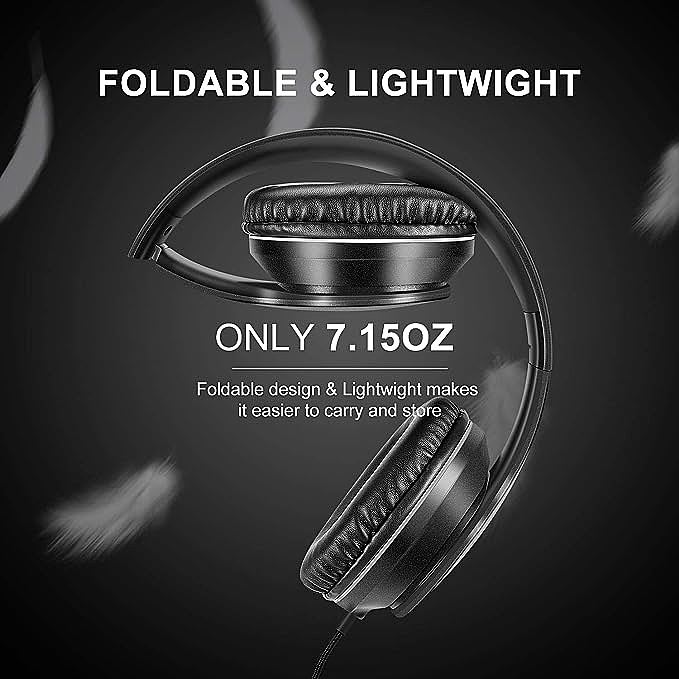
The Reliability of Simplicity
In engineering, there is a concept known as “Mean Time Between Failures” (MTBF). Generally, the more complex a system is—the more parts it has—the lower its MTBF. Wireless headphones are incredibly complex systems containing batteries (which degrade), software (which bugs out), and radios (which interfere).
The Battery-Free Advantage
The LORELEI X6 has an infinite playback time. It draws the minuscule amount of power it needs (milliwatts) directly from the audio signal itself via the cable. This eliminates “range anxiety.” For a student in a remote learning session or a professional on a long zoom call, the reliability of a device that cannot die in the middle of a task is a tangible asset.
Obsolescence Proofing
Lithium-ion batteries have a finite lifespan, typically 300-500 charge cycles before their capacity degrades significantly. This means every wireless headphone has a built-in expiration date of roughly 3-5 years. The X6, lacking a chemical battery, has no such shelf life. A wired headphone from 1990 works just as well today as it did then. This makes the wired choice not just an economic one, but an environmentally sustainable one. It resists the cycle of disposable electronics.
Conclusion: The Wired Renaissance
The LORELEI X6 Over-Ear Headphones are a reminder that “advancement” is not linear. While wireless technology offers the convenience of movement, it demands payment in the form of latency, compression, and battery dependence. The analog connection refuses this transaction.
By adhering to the simple physics of copper wire and magnetic drivers, the X6 offers a purity of experience that is becoming increasingly rare. It provides the immediacy of zero latency for the gamer, the fidelity of uncompressed audio for the listener, and the peace of mind of infinite reliability for the worker. In a world of fleeting digital connections, the physical link of the analog wire remains the strongest bond between the listener and the sound.