Engineering Resilience: The Physics of Hydrophobicity, Acoustic Isolation, and Ergonomic Coupling
Update on Jan. 15, 2026, 11:45 a.m.
When we consider the engineering of a personal audio device, it is natural to focus on the active components: the vibrating driver, the transmitting chip, the powering battery. However, a pair of earbuds exists in a physical reality that is often hostile and always demanding. They must function while submerged in corrosive sweat, survive torrential rain, block out the chaos of the outside world, and sit comfortably in the sensitive, uniquely shaped cartilage of the human ear for hours on end.
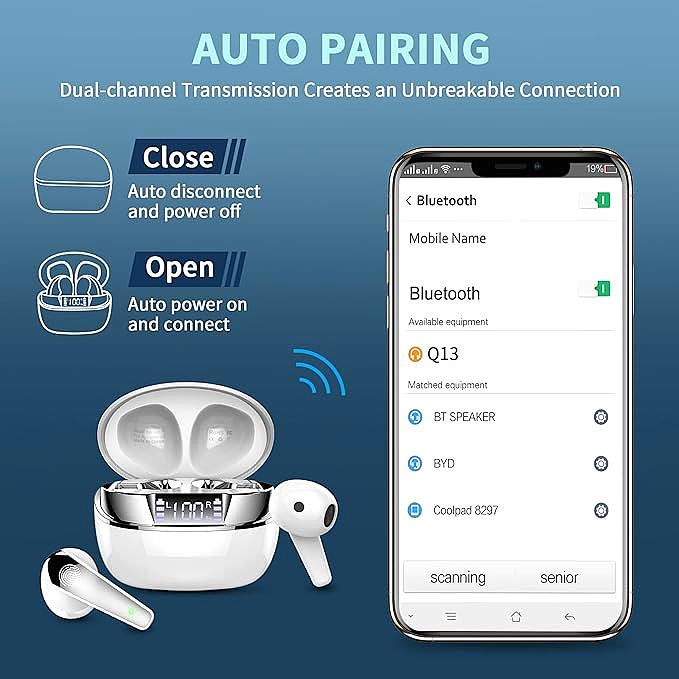
This third pillar of audio engineering—Environmental Adaptability—is often the unsung hero of the user experience. It determines not just how good the audio sounds in a quiet room, but how usable the device is in the real world. The Uaue Q13 Wireless Earbuds, with their IP7 waterproof rating and ergonomic in-ear design, provide an excellent case study to explore the physics of interaction. This article delves into the microscopic world of hydrophobic coatings, the wave mechanics of passive noise isolation, and the complex biophysics of the ear canal.
The Fortress Against Fluids: Decoding IP7 and Hydrophobicity
Water is the nemesis of electronics. It causes short circuits, corrodes contacts, and swells materials. Yet, the Uaue Q13 claims an IP7 rating, suggesting it can withstand immersion. How is this barrier constructed? It is not merely about tight rubber seals; it is a battle fought at the molecular level involving surface tension and contact angles.
The Physics of Wetting
Whether a surface gets “wet” depends on the interaction between the liquid molecules and the solid surface. This is measured by the contact angle. * Hydrophilic (Water-loving): If the contact angle is less than 90 degrees, the water spreads out flat, wetting the surface. This is bad for electronics. * Hydrophobic (Water-fearing): If the contact angle is greater than 90 degrees, the water beads up. * Superhydrophobic: Angles greater than 150 degrees causing water to bounce off.
To achieve an IP7 rating (Ingress Protection Level 7: immersion up to 1 meter for 30 minutes), engineers often employ nano-coatings. These are extremely thin layers (often plasma-deposited) of fluoropolymers that lower the “surface energy” of the device’s internal and external components.
Imagine the device’s surface covered in microscopic spikes or pillars. When a water droplet lands, it sits on top of these pillars, supported by a cushion of air trapped in the gaps. This is known as the Cassie-Baxter state. For the Uaue Q13, this means that even if sweat enters the charging port or the mesh grille, it refuses to “wet” the sensitive metal contacts. The water remains as spherical beads that can be easily shaken out, preventing the electrolytic corrosion that typically kills active lifestyle gear.
The Silent Seal: Passive Noise Cancellation (PNC) Physics
While “Active Noise Cancellation” (ANC) gets the headlines for using anti-noise to cancel low-frequency hums, it is Passive Noise Cancellation (PNC) that does the heavy lifting for the majority of the frequency spectrum. PNC is essentially soundproofing, and it relies on the physical blocking of sound waves.
The Uaue Q13’s “In-Ear” form factor is the primary engine of PNC. By sealing the ear canal with a silicone tip, the device acts as an acoustic plug. The effectiveness of this plug is governed by the physics of transmission loss.
Wavelengths and Barriers
Sound travels as waves. Low-frequency sounds (like a truck engine) have long wavelengths (meters long) that can easily bend around obstacles or pass through thin materials. High-frequency sounds (voices, typing, wind) have short wavelengths (centimeters or millimeters).
A physical barrier, like the body of the earbud and the silicone seal, is extremely effective at reflecting and absorbing these short, high-frequency waves. This is why, even without ANC turned on, a well-fitted earbud instantly muffles the sharp sounds of the world. * Mass Law: The heavier and denser the barrier, the more sound it blocks. While earbuds are light (the Q13 is under 5g), the density of the plastic and the tight acoustic seal create a significant impedance mismatch for the sound waves, forcing them to bounce back rather than enter the ear canal. * The Seal Integrity: The performance of PNC is binary. A 99% seal is not 99% effective; a tiny leak allows a disproportionate amount of sound energy to enter, destroying the isolation. This leads us to the critical importance of ergonomics.
Ergonomic Coupling: The Biology of the Ear Canal
The human ear is not a uniform tube; it is a complex, sigmoid-shaped (S-shaped) canal lined with sensitive skin and terminating in the delicate tympanic membrane. Designing a rigid object like the Uaue Q13 to fit universally into this organic void is an exercise in anthropometry (the scientific study of human body measurements).
The Occlusion Effect
When an earbud seals the canal effectively, it creates a closed pressure chamber. This leads to a psychoacoustic phenomenon known as the Occlusion Effect. Vibrations from your own body—chewing, walking, breathing—are normally vented out of the open ear canal. When the canal is blocked, these low-frequency vibrations are trapped and reflected back to the eardrum, amplifying them significantly.
Engineers must balance the tightness of the seal (for PNC and bass response) with the severity of the occlusion effect. * Bass Enhancement: This closed chamber is also why in-ear headphones have such powerful bass compared to open-back headphones. The driver pressurizes the small volume of air in the canal directly. This “room gain” effect allows the 13mm drivers of the Q13 to produce deep bass without needing massive power, leveraging the physics of the coupled air volume. * Pressure Relief: To mitigate the discomfort of occlusion (that “underwater” feeling), sophisticated designs often include tiny vents. These vents are acoustically tuned (using resistive mesh) to allow static pressure to equalize without letting outside noise in or letting bass pressure leak out.
Touch Control: Capacitive Sensing Mechanics
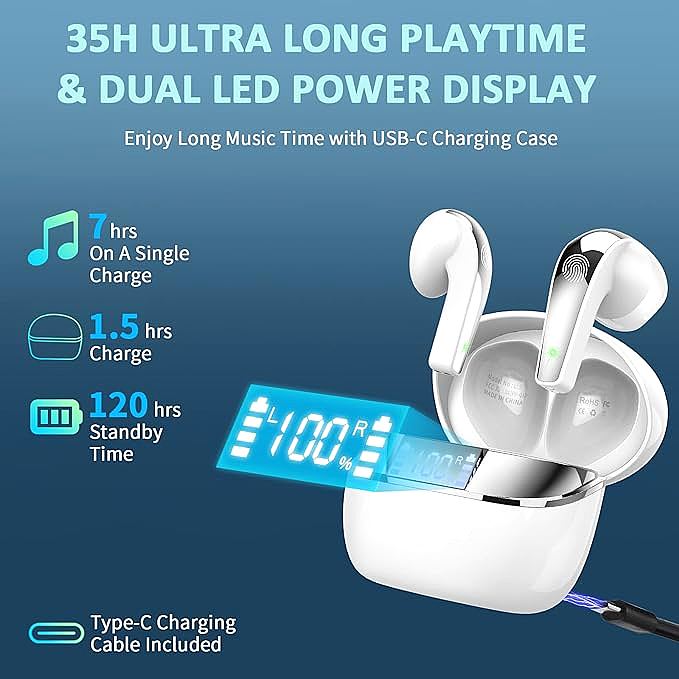
The interface between the user and the device also deserves a nod to physics. The Touch Control on the Q13 replaces mechanical buttons, which are hard to press on a device lodged in your ear.
This technology relies on capacitive sensing. The outer shell of the earbud contains an electrode. Your body is conductive and holds a certain electrical charge. When your finger approaches the electrode, it forms a capacitor (two conductors separated by an insulator). The sensor detects the change in capacitance (the ability to store charge) caused by the presence of your finger.
This detection happens in microseconds and requires sophisticated filtering algorithms to distinguish between a deliberate tap (high capacitance change, specific duration) and an accidental brush against a hood or pillow. This “binaural separation design” ensures that the left and right earbuds can interpret these electrical signals independently, allowing for complex control schemes without physical actuation.
Conclusion: The Harmony of Adaptation
A successful piece of wearable technology is one that disappears. It withstands the elements through hydrophobic chemistry, it silences the world through acoustic physics, and it fits the body through anthropological design. The Uaue Q13 Wireless Earbuds demonstrate that “durability” and “comfort” are not vague marketing terms, but the result of rigorous engineering decisions.
By mastering the interface between the device and the environment—be it water, noise, or the human body itself—engineers ensure that the technology serves the user, rather than the user serving the technology. In this symbiosis of physics and biology, we find the true comfort of modern audio.