The Material Science of Inflatable Tech: How Water Bikes Get Rigid

Spatium Water Bike for Lake Inflatable Pontoon with Pedal
Consider the paradox: a watercraft capable of supporting a 250-pound adult, robust enough to handle lake chop, can be deflated, folded, and stored in the trunk of a car. This feat of engineering, embodied in devices like the Spatium Water Bike, challenges our intuitive understanding of "inflatable" objects, which we typically associate with pool toys and air mattresses. The secret lies not in magic, but in a sophisticated application of material science and engineering philosophy. The rigidity of these modern watercraft is an alchemy of advanced polymers and strategically chosen metals, demonstrating how we can, in essence, build solid structures out of air.

The Core Technology: Weaving Rigidity with Drop-Stitch PVC
At the heart of this technology are the inflatable pontoons, which are far more complex than simple air bladders. They are constructed using a method known as "drop-stitch" technology, borrowed from high-performance inflatable paddleboards. Imagine two parallel sheets of durable, multi-layer Polyvinyl Chloride (PVC) fabric. These sheets are connected not by empty space, but by thousands of high-tensile polyester threads. When the pontoon is deflated, these sheets lie flat. But as air is pumped in, often to pressures exceeding 15 pounds per square inch (PSI), these threads are pulled taut.
These threads act as an internal skeleton, preventing the structure from ballooning into a useless, rounded tube. Instead, they force the PVC sheets to form a flat, incredibly rigid panel. Studies in the Journal of Composite Materials have shown that a drop-stitch structure, when properly inflated, can achieve a flexural rigidity comparable to that of a solid sheet of plywood. This is the alchemy: air pressure is transformed into structural integrity via tensile force. The result is a platform that provides the necessary buoyancy without the weight, bulk, or storage constraints of traditional solid materials like fiberglass or rotomolded plastic.
The Skeleton: A Tale of Two Metals in a Corrosive World
While drop-stitch technology creates the buoyant platform, this "skin" requires a strong "skeleton" to connect the rider, seat, and drivetrain. The choice of materials for this frame is a masterclass in engineering trade-offs, primarily a battle between strength, weight, and corrosion. The frame itself is typically constructed from a high-strength aluminum alloy, such as 6061-T6. According to material databases, this alloy boasts a yield strength of around 276 MPa, providing ample rigidity. Crucially, its density is only about one-third that of steel, which is paramount for keeping the entire assembly at a manageable weight (e.g., 21 kg) for portability.
However, for the components doing the hardest work in the most hostile environment—the gears and shafts inside the drive unit—a different material is chosen: stainless steel, often a marine-grade alloy like 316L. While slightly stronger (with a yield strength around 290 MPa), its primary advantage is its exceptional resistance to corrosion, particularly from chloride ions in saltwater. Aluminum, while corrosion-resistant in freshwater, can be susceptible to pitting in saline environments. This dual-material strategy is a core tenet of efficient engineering: it doesn't use the "best" material everywhere, but rather the right material precisely where its properties are most needed, optimizing for performance, longevity, and weight simultaneously.
Design Trade-offs: Portability vs. The User Experience
This philosophy of using the right material for the right job extends beyond raw substance and into the very design of connections and assemblies. The absolute requirement for portability forces engineers into a series of clever, though sometimes misunderstood, trade-offs. A user review for one such water bike noted that "this was not fun to put together" and questioned the security of the propeller attachment, which used pressure screws rather than through-bolts.
This isn't a design flaw, but a deliberate engineering choice. To be disassembled, connections cannot be permanently welded or bonded. Using pressure screws to clamp a component onto a shaft avoids drilling holes into the main structure, which could create stress concentration points or pathways for corrosion. While it demands proper tightening and user diligence—hence the inclusion of a secondary safety wire—it preserves the structural integrity and portability of the design. It's a calculated balance between the absolute rigidity of a permanent structure and the immense practical value of a vehicle that can be taken to any body of water on a whim.
In the end, a modern water bike is a testament to the power of material science. It demonstrates that with the right technologies, "inflatable" no longer means "flimsy." Through the hidden architecture of drop-stitch threads and the pragmatic selection of alloys, engineers have crafted a new class of personal watercraft that is strong, light, and wonderfully portable. It is a reminder that the performance of any advanced machine rests upon the humble, carefully chosen materials from which it is built.
Spatium Water Bike for Lake Inflatable Pontoon with Pedal
Related Essays

The Unseen Science in Your Garage: How a Fishing Rod Rack Works
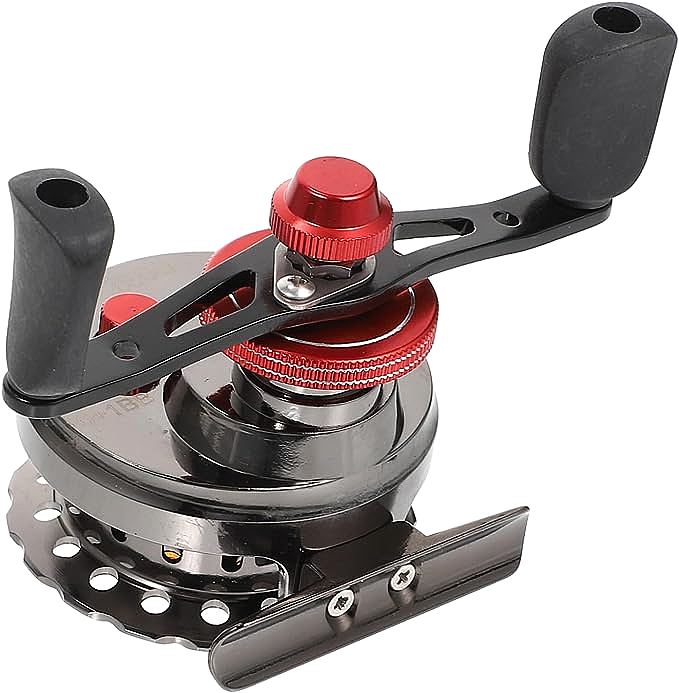
An Engineer's Teardown: The Hidden Science in Your Ice Fishing Reel

Engineered for Leisure: The Hidden Science in a Weatherproof Patio Daybed

The Kinetics of Casting: Engineering the Lew's Tournament MP

Electromechanics of Shade: Engineering the YESCAMP 5700 Motorized Awning

The Physics of Modularity: Engineering an Adaptive Sleep System

The Physics of Shelter: Deconstructing the ShinHye Canvas Bell Tent

Thermodynamics in the Kitchen: The Science of Gas Cooktop Engineering

Thermodynamics of the Camp Kitchen: Engineering the Pellethead Freedom Stove
