From Silk to Superpower: The Hidden Science in Your Fishing Line
Update on Aug. 2, 2025, 8:26 a.m.
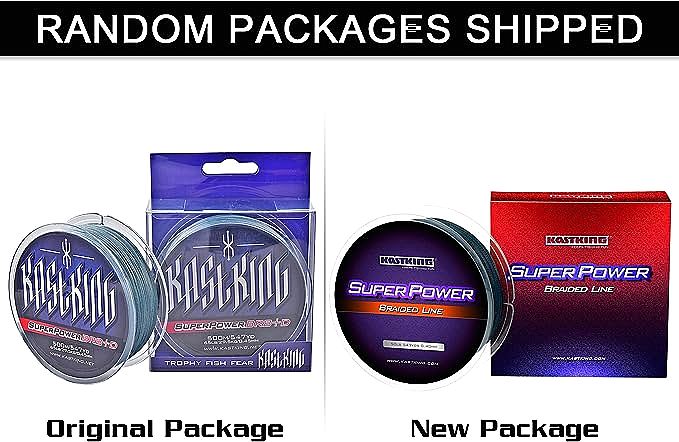
Imagine, for a moment, an angler from the 1940s. He stands by a serene lake, his trusty steel rod in hand, spooled with the era’s finest silk or nylon line. Now, imagine placing a modern spool of braided line, like the KastKing SuperPower Braid, into his hands. You tell him that this impossibly thin, supple thread, with a 20-pound test strength, is thinner and vastly stronger than his current setup. He would likely laugh, dismissing it as a magic trick. Yet, this “magic” is one of the most remarkable, and often overlooked, triumphs of modern material science, a story that transforms a simple fishing trip into a journey through technological history.
Our 1940s angler lived at the dawn of a revolution. Before then, for millennia, fishing lines were crafted from nature’s offerings: twisted horsehair, fine silk from China, or linen. These lines were serviceable, but they were also thick, weak by today’s standards, and prone to rot. The breakthrough arrived in 1938 from an unlikely place: a DuPont laboratory. Chemist Wallace Carothers and his team unveiled a synthetic polymer they called Nylon, a “miracle fiber” that would change the world, from women’s stockings to the parachutes of World War II. For anglers, nylon monofilament was a revelation. It was cheap, relatively strong, and consistent. It became the undisputed king of fishing lines for half a century, the very definition of what a fishing line was. But it had its own inherent flaws: it stretched, absorbed water, and weakened under the sun’s ultraviolet rays. The stage was set for the next quantum leap.
A Material from Another Realm
The successor to nylon did not come from a gradual improvement, but from a completely different family of materials. Enter Ultra-High-Molecular-Weight Polyethylene, or UHMWPE. This is not your everyday plastic. While technically in the same polyethylene family as a plastic grocery bag, comparing them is like comparing a house cat to a Siberian tiger. UHMWPE is a super polymer, a material so extraordinary that its commercial variants, such as Dyneema® and Spectra®, are used to craft body armor, construct surgical implants, and tether satellites in space. Its arrival in the fishing world was nothing short of transformative.
The immense strength of a braided line made from UHMWPE isn’t due to some exotic element, but to its microscopic architecture. It is created through a sophisticated process called gel-spinning. Imagine trying to untangle a massive, knotted ball of yarn—that’s ordinary plastic. Gel-spinning, in essence, coaxes these long-chain polymer molecules to stretch out and align themselves in a near-perfect parallel state, forming highly ordered structures known as crystalline regions. Think of it as transforming that tangled yarn into a flawless, tightly woven suspension bridge cable. This microscopic alignment is the secret to its incredible tensile strength, allowing a hair-thin fiber to possess a strength-to-weight ratio that can be up to 15 times greater than steel. It’s this structure that gives it its legendary abrasion resistance; there are simply fewer loose ends and disordered molecules to snag and tear when dragged across a rough surface.
The Telegraph of the Deep and the Art of the Knot
This unique molecular structure gives rise to physical properties that fundamentally change the angling experience. The most celebrated is its near-zero stretch. While nylon acts like a bungee cord, absorbing and dampening the faint tap of a curious fish, a UHMWPE braid acts like a telegraph wire. The slightest vibration from the lure—a tick on a rock, a subtle inhale from a bass—is transmitted instantly and directly to the angler’s hand. It is a direct line of communication to the unseen world beneath the water, offering a level of sensitivity that was previously unimaginable.
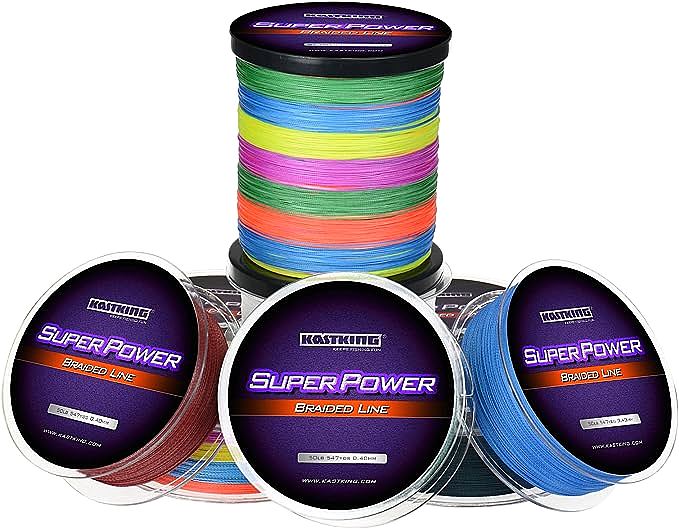
The construction of the braid itself adds another layer of engineering. The KastKing SuperPower line, for instance, uses a 4-strand weave for its lighter tests and an 8-strand weave for the heavier ones. A 4-strand line is a durable, cost-effective workhorse with a slightly flatter profile. An 8-strand weave, however, produces a much rounder, smoother, and more compact line. This isn’t just for aesthetics. According to the principles of hydrodynamics and friction, a rounder line cuts through the water and air with less resistance, enabling longer, more accurate casts.
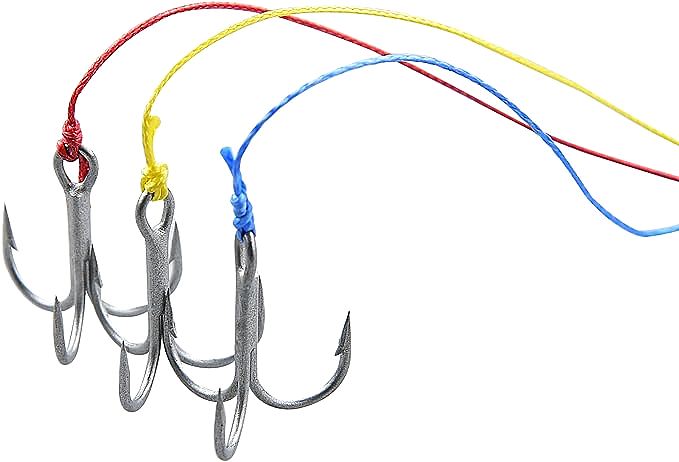
Yet, this super-slick, low-friction surface presents a unique challenge that bridges science and skill: knot tying. The same slipperiness that allows for record-setting casts also allows traditional fishing knots, like the standard clinch knot, to fail and unravel under pressure. This material property demands a different approach. Anglers using braided lines must master specific knots, like the Palomar knot or the improved clinch knot, which are designed with extra loops and turns to use friction against itself, ensuring a grip that will not slip. In this, the angler becomes a practical engineer, applying physics to securely connect with their quarry.
An Inheritance of Knowledge
The spool of modern braided line in an angler’s hand today is far more than just a tool. It is a tangible piece of history, a direct descendant of centuries of innovation, from ancient natural fibers to the revolutionary labs of DuPont and beyond. It represents a mastery over the world of polymers, allowing us to create materials that are, pound for pound, among the strongest ever conceived by humankind. When you cast a line like the KastKing SuperPower, you are not just fishing; you are leveraging a legacy of scientific discovery. Understanding this hidden science doesn’t just make you a better angler—it deepens the entire experience, connecting every cast and every catch to a remarkable story of human ingenuity.