The Metallurgy of Accessibility: Redefining the Modern Spincast Reel
Update on Nov. 19, 2025, 3:54 p.m.
In the hierarchy of angling equipment, the spincast reel often occupies a misunderstood position. Frequently dismissed as a “beginner’s tool” or a plastic relic of childhood, this enclosed reel design has suffered from decades of cost-cutting manufacturing that prioritized volume over precision. However, a quiet revolution has been occurring in reel engineering. The modern spincast reel is no longer defined by plastic components and sloppy tolerances but by aerospace-grade alloys and advanced tribology (the study of friction).
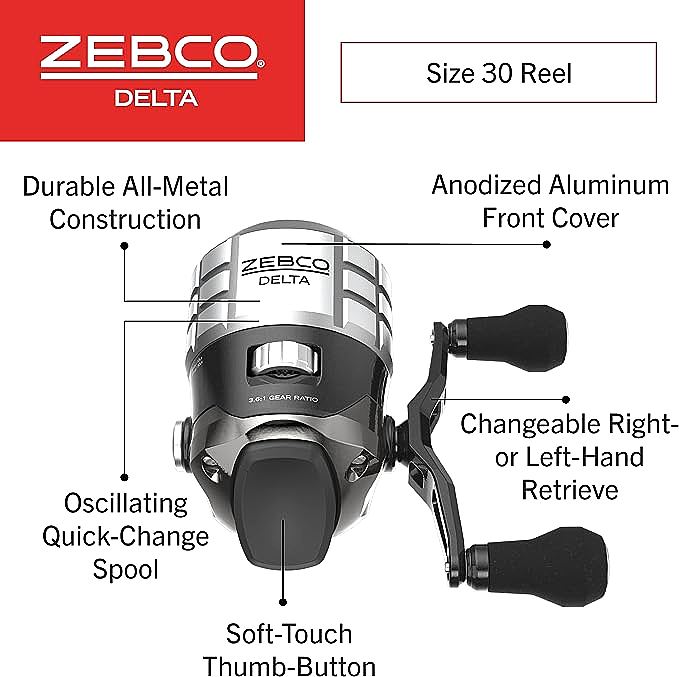
To understand this evolution, we must look past the nostalgic “push-button” interface and examine the internal mechanics that drive performance. The Zebco Delta 30SZ serves as an ideal case study for this resurgence, illustrating how specific material choices—specifically brass, aluminum, and ceramic—can fundamentally alter the physics of a fishing reel.
The Core Transmission: Brass vs. The World
The heart of any fishing reel is its gear train—the transmission system that converts the rotational energy of the handle into the retrieval of the line. For years, entry-level spincast reels utilized nylon or pot-metal gears. While cheap to produce, these materials suffer from low shear strength; under the load of a heavy fish or a snag, the teeth can deform or strip entirely.
The engineering shift seen in high-performance models like the Delta 30SZ centers on the use of a Solid Brass Pinion Gear. In mechanical design, brass is often superior to steel for small gears due to three key properties:
1. Self-Lubrication: Brass alloys inherently reduce friction when meshed against other metals, leading to a smoother retrieval feel without excessive grease.
2. Ductility: Unlike brittle hardened steel, brass has a slight “give” that allows it to absorb shock loads (like a sudden fish strike) without fracturing.
3. Corrosion Resistance: In the wet environment of fishing, brass resists oxidation far better than ferrous alternatives.
When you turn the handle of a reel equipped with all-metal gears, you aren’t just feeling “smoothness”; you are feeling the result of precise CNC machining replacing injection molding. The torque transfer is direct, with zero “slop” or hesitation.
Friction Management: The Ceramic Solution
One of the historic weaknesses of the spincast design is the “Pick-Up Pin” system. These are the small posts that engage the line to wind it back onto the spool. In older designs, these were often made of soft steel. Over time, modern abrasive lines—especially braided superlines—would cut grooves into these pins. These grooves would then fray the line, leading to catastrophic breakage.
The solution lies in material hardness. The Delta 30SZ employs Dual Ceramic Pick-Up Pins. Ceramic materials, such as Zirconia or Silicon Nitride, possess a Vickers hardness rating significantly higher than steel. * Abrasion Resistance: Braided line, which acts like a microscopic saw, cannot scratch the ceramic surface. * Heat Dissipation: Friction generates heat, which can weaken monofilament line. Ceramics dissipate this friction heat efficiently, preserving the integrity of the line during high-speed runs.
This upgrade transforms the spincast from a “monofilament-only” device into a versatile tool capable of handling modern braided lines, opening up techniques like heavy-cover bass fishing that were previously off-limits to this reel class.
Structural Integrity: The Chassis Factor
Torque is useless if the frame flexing dissipates it. Plastic bodies, common in “big box store” reels, flex under load. When a reel body twists, the gears inside misalign. This misalignment leads to grinding, increased wear, and a loss of cranking power.
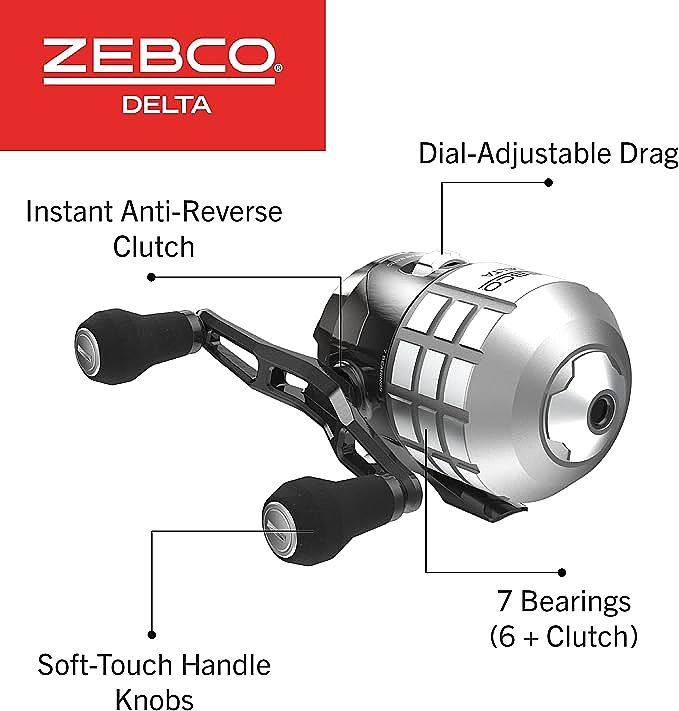
Engineers combat this via rigidity. The Delta 30SZ features an anodized aluminum front cover and chassis components. Aluminum offers an exceptional strength-to-weight ratio. By creating a rigid housing for the gear train, the reel ensures that the gears remain in perfect alignment even when winching a heavy lure through weeds. The “Instant Anti-Reverse” clutch further reinforces this solidity. Instead of the old-school “clicking” pawl that allowed the handle to rotate backward slightly, a one-way roller bearing locks the handle instantly. This ensures that 100% of the hook-setting force is transferred to the fish’s jaw, rather than being lost to mechanical play.
The Drag Differential: Oscillating Precision
The final piece of the engineering puzzle is the drag system. Spincast reels typically use a dial-adjustable drag, which compresses a stack of washers to create resistance. The effectiveness of this system depends on the surface area and the material of the friction discs.
With a 20-pound max drag, the mechanism in the Delta 30SZ is calibrated for substantial pressure. However, power is nothing without control. The 3.6:1 gear ratio is deliberately chosen to balance retrieval speed with cranking torque (19 Inches Per Turn). This gear reduction acts like a winch, allowing the angler to overpower fish without straining the internal components. Coupled with an oscillating spool system that lays line evenly to prevent “dig-in,” the mechanical ecosystem is designed to minimize failure points.
Conclusion: A New Era of Accessibility
The narrative that spincast reels are merely “toys” is scientifically outdated. When constructed with the correct metallurgy—brass gears, aluminum housings, and ceramic contact points—the spincast reel becomes a serious implement. It offers the unique ergonomic advantage of one-handed casting and wind-knot immunity, now backed by the structural durability required for rigorous angling.
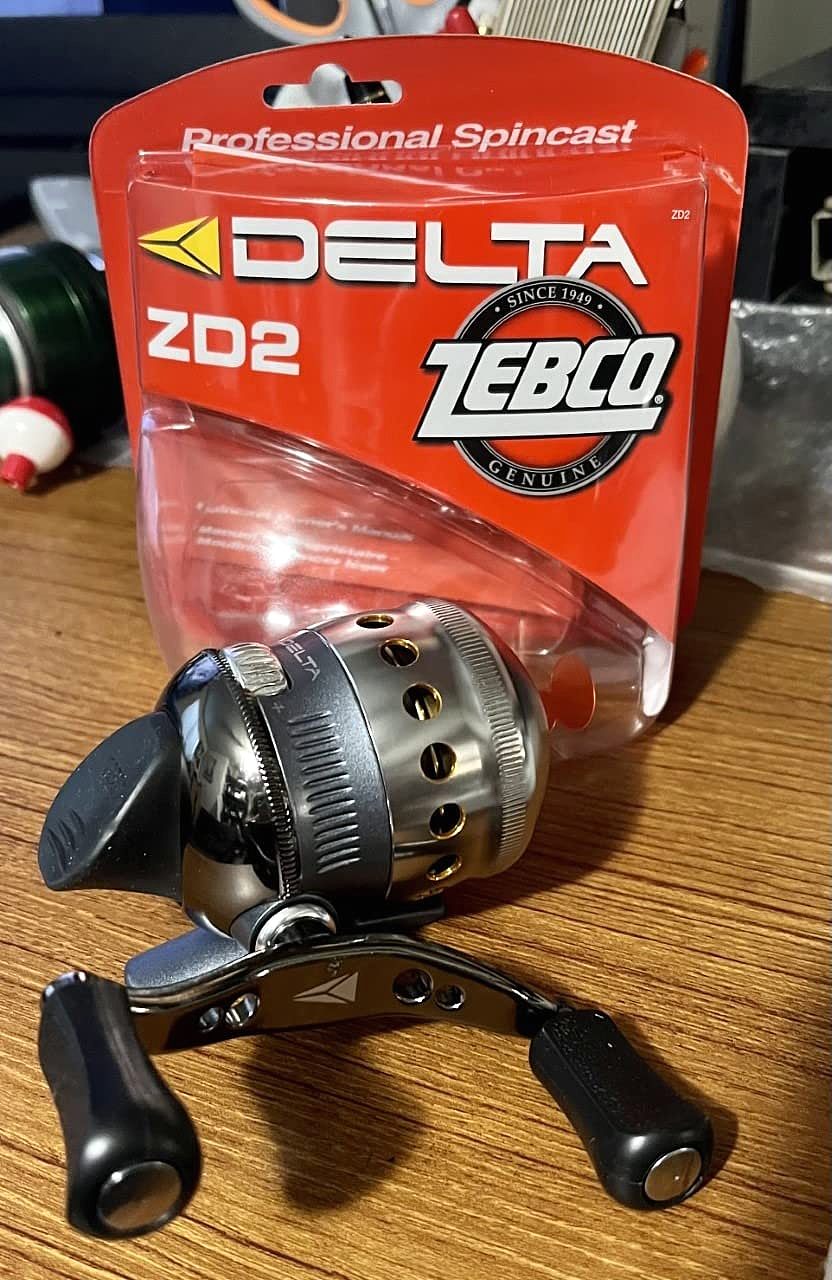
The Zebco Delta 30SZ stands as a testament to this material evolution. It proves that accessibility does not have to come at the cost of performance. By integrating industrial-grade materials into a user-friendly form factor, it bridges the gap between the novice’s first cast and the expert’s precise presentation.