The Mechanics of Legacy: Decoding the Centrifugal Physics and Structural Engineering of the Abu Garcia C3
Update on Nov. 19, 2025, 5:49 p.m.
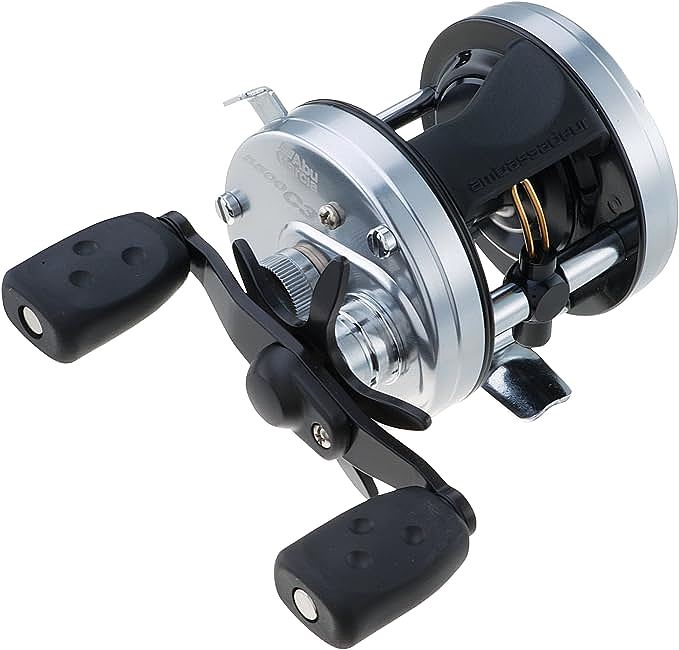
In an era where fishing technology increasingly relies on microchips, digital braking profiles, and polymer composites, the Abu Garcia Ambassadeur C3 stands as a defiant monument to mechanical purity. Originating from the precision watchmaking town of Svängsta, Sweden, this reel is not merely a tool for catching fish; it is a lesson in applied physics. Its enduring relevance is not born of nostalgia, but of engineering principles that prioritize structural integrity and mechanical feedback over fleeting innovation.
To understand why this design has survived for decades while others have become obsolete, we must deconstruct it—not as anglers, but as engineers looking at a machine designed to manage kinetic energy and torque.
The Governor: The Physics of Centrifugal Braking
The primary challenge in baitcasting mechanics is the “backlash”—a chaotic event where the spool’s rotational speed exceeds the lure’s flight speed, causing the line to overrun. Modern reels often use magnetic fields to apply a constant braking force. The C3, however, utilizes a 6-pin Centrifugal Brake System, a mechanism that operates on the same principle as a steam engine’s flyball governor.
This system is dynamic, not static. * The Launch (High RPM): When you cast, the spool accelerates rapidly. Centrifugal force pushes the plastic brake blocks outward against a stationary raceway (brake drum). * Friction Generation: The friction between the blocks and the raceway creates a braking force. Crucially, this force is proportional to the square of the angular velocity. The faster the spool spins, the harder the brakes apply. * The Flight (Deceleration): As the lure slows down and spool RPM drops, the centrifugal force decreases. The brake blocks retract slightly, reducing friction and allowing the spool to spin freely for maximum distance.
This creates a self-regulating feedback loop. It is “intelligent” without a single circuit board, relying entirely on Newton’s laws of motion to manage the cast.
Thermodynamics of the Drag: The Carbon Matrix
When a fish fights, the reel acts as a clutch, dissipating the fish’s kinetic energy as heat. Traditional drag materials like cork or felt are prone to “stick-slip”—a phenomenon where the transition from static friction (holding) to kinetic friction (slipping) is jerky. This inconsistent release can snap lines.
The C3 employs a Carbon Matrix™ Drag System. Carbon fiber is chosen for its exceptional thermal stability and consistent coefficient of friction. * Heat Dissipation: Unlike organic materials that can glaze or burn under the friction of a long run, carbon fiber maintains its structural integrity at high temperatures. * Linear Performance: The “weave” of the carbon matrix provides a smooth engagement surface. This ensures that the force required to start the spool slipping is nearly identical to the force required to keep it slipping. This linearity gives the angler precise control, minimizing the risk of shock-loading the line.
Structural Rigidity: The Argument for the Round Shape
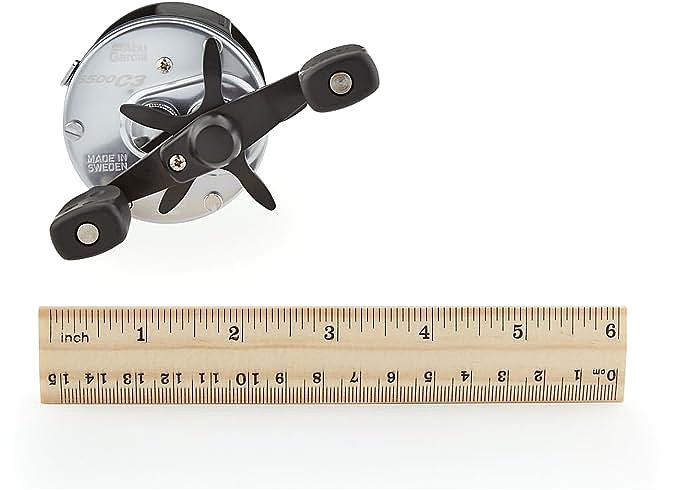
In structural engineering, geometry dictates strength. The C3’s classic round profile is not an aesthetic choice; it is the most efficient shape for containing hoop stress.
Modern “low-profile” reels often compromise frame rigidity to achieve a palmable shape. Under the heavy load of a large catfish or pike, a non-rigid frame can twist (torque). This misalignment forces the gears to mesh imperfectly, leading to rapid wear and a “gritty” feel.
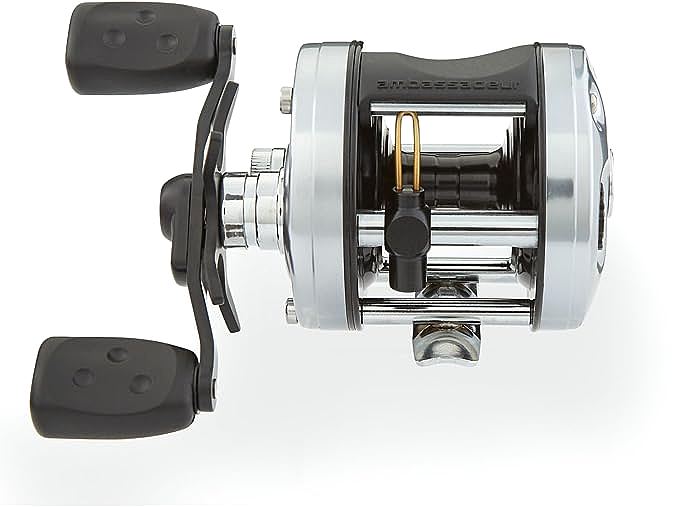
The C3 utilizes a rigid aluminum frame that supports the drivetrain in perfect alignment. Inside, the main gear is machined from brass, a material revered in engineering for its durability and self-lubricating properties under load. This combination of a rigid chassis and dense gearing ensures that the energy you put into the handle is transferred directly to the line, with minimal loss to structural flex.
The Philosophy of Serviceability
Perhaps the most significant feature of the C3 is its right to repair. In a consumer landscape dominated by sealed units and planned obsolescence, the Ambassadeur is built to be disassembled. Every screw, spring, and bearing is accessible. This serviceability transforms the reel from a disposable commodity into a lifelong companion. Regular maintenance—cleaning the worm gear, oiling the bearings, greasing the drag—is not a chore but a ritual that extends the mechanical life of the device indefinitely.
Conclusion
The Abu Garcia Ambassadeur C3 validates a simple engineering truth: well-applied physics does not age. By mastering the centrifugal forces of the cast and the thermodynamics of the drag, it offers a level of performance that is honest, predictable, and enduring. It stands as a reminder that in the pursuit of the perfect catch, the most reliable technology is often the one you can understand, maintain, and trust implicitly.